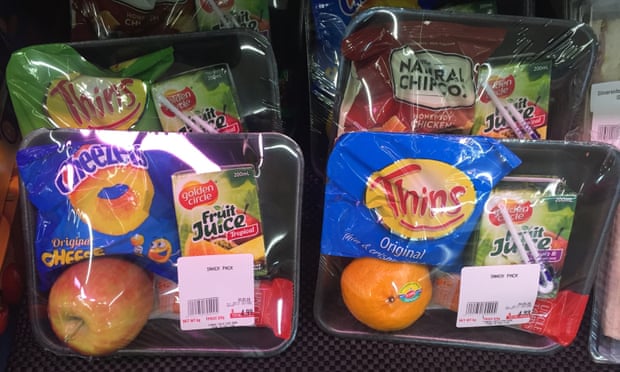
The government is to introduce a new tax on plastic packaging as it seeks to ramp up efforts to tackle the scourge of litter and waste from single-use plastics, it was confirmed in the budget.
Food and drink companies will be taxed on plastic packaging that does not include at least 30% recycled content, in a drive to reduce dependence on “virgin plastics” that are difficult or impossible to recycle, such as black food trays and plastic straws.
But the new tax – subject to consultation – is not due to come into force until April 2022. It will cover plastics produced in the UK as well as those that have been imported.
The chancellor also announced a £10m fund to stamp out fly-tipping, joking that the shadow chancellor, John McDonnell’s recent skirmish with a pile of rubbish near his home showed how dangerous it can be.
Also unveiled was a further fund of £20m to tackle plastics and boost recycling; £10m for research and development and £10m to help fund innovative approaches to reducing litter, such as electronic smartbins.
The new measures come a year after the BBC’s Blue Planet 2 TV series forced the issue of plastic waste up the political agenda and just weeks before the Department for Environment, Food and Rural Affairs releases its long-awaited resources and waste strategy.
However, in his budget speech the chancellor rowed back from a mandatory “latte levy” – a charge on disposable coffee cups to discourage their use – despite mounting concerns over the massive scale of wastage. It is estimated that about 2.5bn disposable coffee cups are used in the UK each year. Although poly-coated paper cups are technically recyclable, few facilities are capable of doing so. This means that most end up in landfill, creating about 25,000 tonnes of waste each year.
In January, MPs on the environmental audit committee called for a standard 25p to be charged on top of the price of all hot drinks bought in single-use cups. But Philip Hammond told MPs he believed this would not deliver “a decisive shift” in consumer behaviour. The government would return to the issue if the industry fails to deliver sufficient progress.
Ministers are understood to have been concerned about the negative impact of a latte levy on high streets, further deterring shoppers when retailers are already struggling.
Greenpeace’s UK executive director, John Sauven, said: “We’re currently in the middle of a plastics pollution crisis and yet the chancellor failed to take even small steps towards stemming the flow of single-use plastics by choosing not to introduce a tax on disposable coffee cups and ignoring calls for a tax on brand new plastic.”
But welcoming the broader package, David Palmer-Jones, the chief executive of Suez recycling and recovery, said: “We are pleased to see that the chancellor is not taking a piecemeal, straw-by-straw approach, but will consult on a more holistic tax, which seeks to drive a circular economy in recycled materials.”