The pharmaceutical industry operates within a stringent regulatory framework that demands stringent safety and hygiene standards for packaging. These requirements extend beyond mere containment to ensuring that packaging materials do not introduce harmful substances into the enclosed products.
Pharmaceutical packaging is driven by a triad of priorities: product protection, precision, and information dissemination. Given the criticality of safeguarding products, specific guidelines govern the choice of plastic materials. Material selection is closely tied to the composition of pharmaceutical substances, necessitating tailored solutions. Serialization and sealing are also imperative to combat counterfeiting.
Sustainability, though less pressing for pharmaceutical firms compared to their food counterparts, introduces a complex interplay of considerations. Choices that enhance sustainability often present trade-offs:
- Reusable systems, while reducing waste, can carry higher CO2 emissions during long-distance transport due to their weight.
- Coated cardboard minimizes plastic usage but faces recycling challenges.
- Glass, with excellent recyclability, demands substantial energy, especially for small vials, a norm in pharmaceuticals.
Defining sustainability objectives is the foremost step for companies, aligning packaging concepts with their overall strategy. Once goals are established, firms must assess their current status and outline necessary actions.
While recyclates are currently unsuitable for primary pharmaceutical packaging due to contamination risks, companies can focus on enhancing recyclability. Prioritizing monomaterials, easier to recycle than composites, aligns with circular economy ambitions. Advancing recyclability and optimizing waste management stand as pivotal avenues for sustainable packaging.
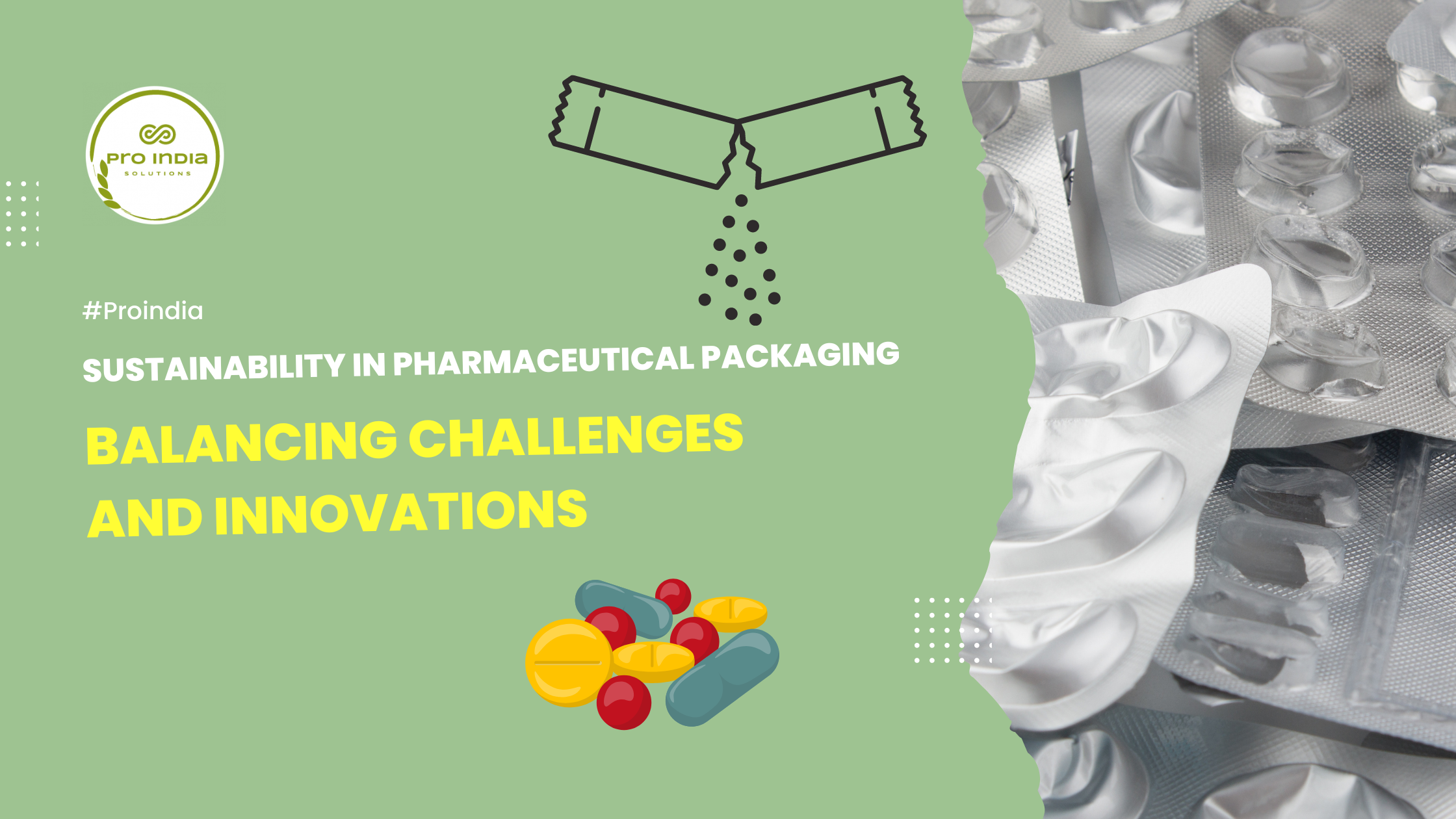
Monomaterial solutions, exemplified by blister packaging, are making headway in the pharmaceutical sector. Conventional blister packaging’s aluminum or PVC parts are environmentally problematic, hampering recycling efforts. Embracing monomaterial alternatives addresses this, exemplified by the growing demand for polypropylene (PP) blister packaging. PP monofilms foster circularity while offering transparent, evenly distributed, and barrier-efficient packaging, safeguarding product quality. In essence, PP film mirrors conventional packaging’s technical attributes while accentuating sustainability, positioning it as a long-term circular economy solution. The shift towards such innovations showcases the pharmaceutical industry’s commitment to striking a balance between product integrity and ecological responsibility.
ProIndia is a consulting firm that helps businesses and organizations achieve their sustainability goals. They offer a variety of services, including:
- EPR audit and compliance: ProIndia can help businesses to comply with the Extended Producer Responsibility (EPR) regulations in India by quick and smooth transfer of credits.
- ESG consulting: ProIndia can help businesses to develop and implement ESG (Environmental, Social, and Governance) strategies.
- Social impact: ProIndia works with businesses and organizations to create social impact through their sustainability initiatives.
Blog by: Yaseen Muneer
PRO India