
Strengthening Quality Performance Through Data and Defect Reduction
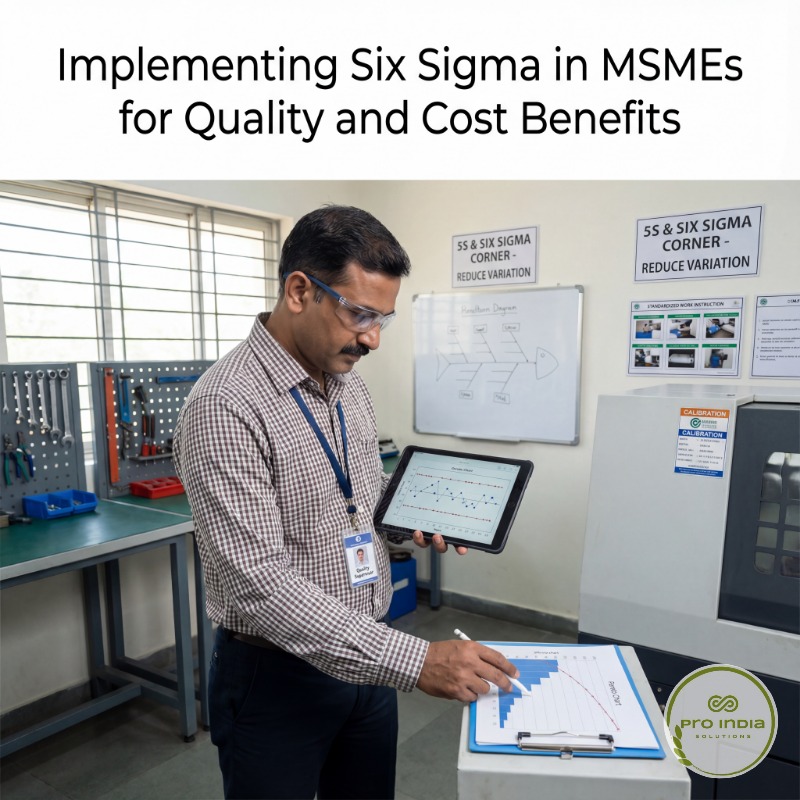
Six Sigma offers MSMEs a structured way to reduce defects, improve consistency, and control operational waste. While world-class performance targets 3.4 defects per million opportunities, many MSMEs operate at a 2 to 3 sigma level with very high defect rates. Even improving to 4 sigma can reduce defects by nearly 90 percent and save 10 to 15 percent of revenue. Using the DMAIC approach helps MSMEs define specific problems, measure performance, and analyze root causes through Pareto charts, fishbone diagrams, and other basic tools. Improvements often come from standardizing work, reducing process variation, calibrating equipment, and training operators. Reducing variation by half can cut defects by 60 to 70 percent. Starting with simple tools like control charts and focusing on one or two high-cost quality issues enables quick results and builds confidence in the methodology.
Building Continuous Improvement Through Structured Methods and Employee Involvement
Long-term impact of Six Sigma depends on employee involvement and disciplined process control. Workers closest to the process often identify practical solutions that contribute up to 30 percent of total improvements. Accurate data collection using logs, check sheets, and calibrated instruments ensures the right decisions are made. Process mapping helps reveal redundant steps and delays, which typically account for 40 to 60 percent of operational effort. Simplifying workflows and using error-proofing techniques reduce recurring defects. Tracking quality costs provides clear financial insight since many MSMEs spend up to 30 percent of revenue on quality issues. Redirecting resources toward prevention significantly reduces failures. Standard operating procedures, regular training, and routine audits help sustain improvements and prevent backsliding.
Leveraging Six Sigma for Long-Term Cost Savings and Competitive Advantage
Six Sigma delivers the greatest value when supported by training, capability building, and regular monitoring. Government schemes such as MSME Competitive and organizations like Pro India offer subsidized training and practical guidance tailored for MSMEs. Early wins such as fixing equipment issues, organizing workspaces, and standardizing tasks help build momentum. Over time, reduced defects, fewer breakdowns, and smoother processes lead to meaningful cost savings and higher customer satisfaction. Even partial adoption of Six Sigma tools strengthens product quality, improves operational stability, and enhances competitiveness. With consistent application, MSMEs can achieve long-term improvements in productivity, quality, and profitability.