
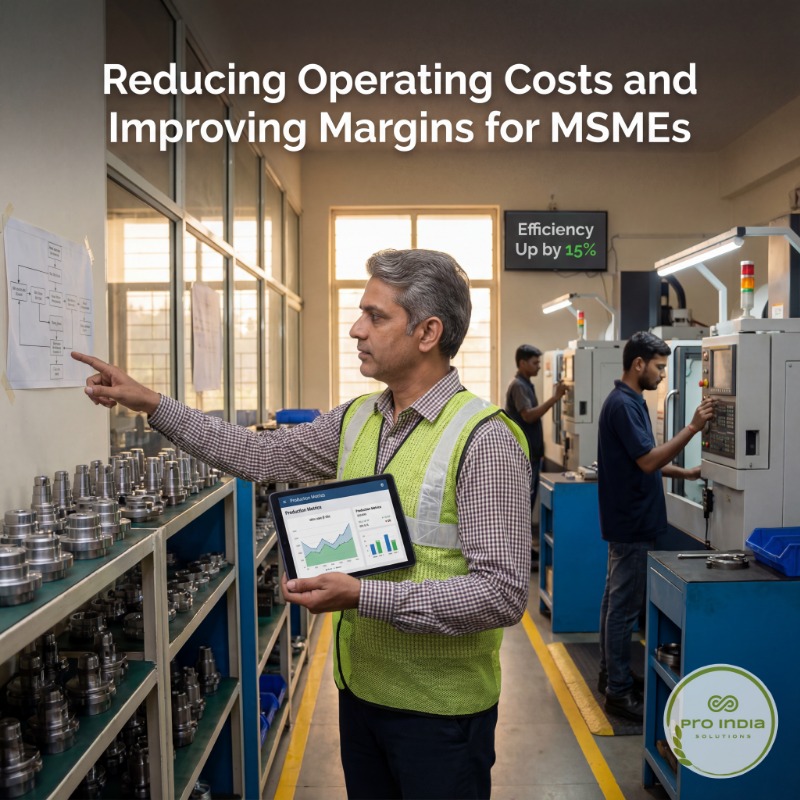
Optimizing Core Cost Drivers to Strengthen Cost Efficiency
For most MSMEs, materials, energy, labor, and maintenance make up the bulk of operating costs, making these areas essential targets for improvement. Materials alone account for 50 to 70 percent of spending, and practices such as just-in-time inventory can reduce carrying costs by 15 to 25 percent. Partnering with a small group of reliable suppliers ensures better pricing and consistency, while daily waste tracking often uncovers 10 to 15 percent savings. Energy costs, typically 10 to 20 percent of total expenses, can be reduced through LED lighting, variable frequency drives, and subsidized rooftop solar installations. Labor productivity improves when workers are trained, multi-skilled, and supported with simplified workflows and incentive-linked pay. Preventive and predictive maintenance further strengthen efficiency by reducing breakdowns by 40 to 60 percent and lowering maintenance spending by up to 35 percent. Together, these measures create a more stable and cost-effective operational foundation.
Strengthening Margins Through Process Improvements and Performance Tracking
Process inefficiencies account for 15 to 25 percent of avoidable operating costs. Workflow mapping helps remove redundant steps and bottlenecks, reducing cycle times by up to 30 percent. Implementing 5S improves workplace organization and speeds up material flow, while standard operating procedures reduce errors and accelerate training for new workers. Quality improvements such as stage-wise checks, defect awareness training, and root-cause analysis can reduce rejections by 40 to 60 percent and lower total operating costs by 10 to 20 percent. Consistent monitoring ensures these gains are sustained. Tracking cost per unit, monthly expenses, and operational trends helps MSMEs identify issues early and stay in control. Combined with strategies like premium pricing for customization or faster delivery, MSMEs often achieve 5 to 10 percentage point margin improvement within a short period.
Building a Structured Roadmap for Long-Term Cost and Margin Improvement
Sustained progress requires a clear, systematic roadmap. MSMEs should start with the highest-impact cost areas and implement quick wins such as renegotiating service contracts, digitizing paperwork, or optimizing material storage. Employee involvement is crucial since their suggestions often lead to practical and low-cost improvements. MSMEs can accelerate progress by leveraging Pro India’s training programs focused on cost reduction, lean operations, and productivity enhancement. Government-supported MSME schemes also provide subsidized consulting for modernization and process optimization. Businesses that follow a structured improvement plan over three to six months typically see operating cost reductions of 15 to 30 percent and margin improvements of 5 to 10 percentage points. Over time, these practices help MSMEs become more competitive, resilient, and financially stronger.